Foam Gasket Application
If an enclosure needs to protect against dust or moisture, the seal and the enclosure design must work together. apra applies foamed-in-place PU seals directly to metal and plastic components, taking into account the sealing contour, mating surface and complete enclosure system.
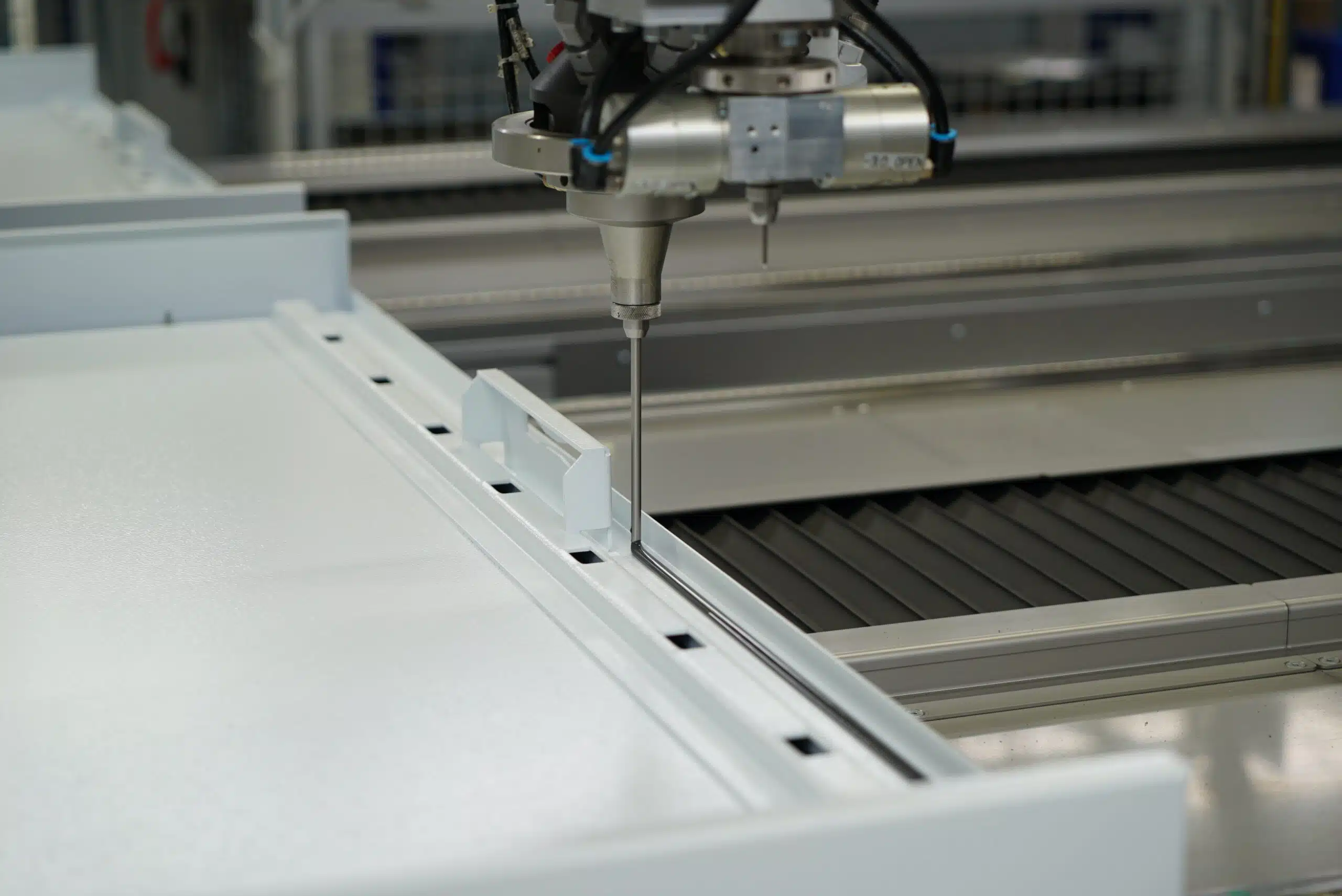
The apra Group uses directly foamed PU seals to seal doors, covers, side and rear panels, as well as frames of metal and plastic enclosures. The sealing contour, material, component geometry, surface finish and subsequent manufacturing processes are considered together to ensure that the seal contributes to the intended level of protection of the complete enclosure system.
Why sealing is important for your enclosure
Depending on their operating environment, metal and plastic enclosures and cabinets must protect electrical and electronic components against dust, moisture and water splashes. To achieve this, the seal must make uniform contact along the intended sealing plane and be compressed to a defined degree when the enclosure is closed. Directly foamed seals can follow even customised contours and are applied directly to the component, eliminating the need to insert a separate sealing profile.
| Enclosure requirement | What apra considers during the design process |
|---|---|
|
Door, cover or removable side panel
|
Matching the sealing contour, mating surface and closing situation to ensure that the seal is compressed evenly.
|
|
Protection against dust and moisture
|
Planning the seal as part of the overall enclosure design and assessing the required degree of protection for the complete system.
|
|
Customised or changing contours
|
Programming the application path based on the drawing and saving it for recurring variants.
|
|
Limited installation space or small seal geometry
|
Checking the cross-section, groove, radii and available sealing surface to ensure they suit the component and material.
|
|
Folded edges, bends and height offsets
|
Taking clearances, dimensional stability and accessibility of the sealing plane into account during the design stage.
|
|
Metal or plastic surfaces
|
Assessing suitability and adhesion for each project and defining the required process sequence.
|
The degree of protection depends on the complete enclosure system
A foamed-in-place seal alone does not determine the degree of protection. Factors such as the enclosure design, seal cross-section, compression, mating surface, fasteners, hinges, cable entries and potential joints all play a role. Depending on the design, enclosure systems with foamed-in-place PU seals can be engineered to meet demanding requirements of up to IP67. However, the degree of protection that can be reliably specified for a particular project must be assessed based on the complete assembly and the agreed test conditions.

Matching the sealing geometry and material to the component
For the seal to make reliable contact, its height and width must match the available sealing surface and the intended mating flange. Radii, grooves, folded edges, bends and height offsets also affect the sealing path. Smaller seal cross-sections may require a groove, while larger seals can be applied directly to a suitable surface, depending on the design and material.
For both metal and plastic components, the surface finish, adhesion, dimensional stability and accessibility of the sealing plane must also be considered. apra assesses the contour and designs the seal to allow for defined compression without permanently overloading it when the enclosure is closed. Closing forces and recovery behaviour are taken into account alongside the enclosure design.
Integrating foam-in-place sealing into the entire manufacturing process
Within the apra Group, foam-in-place sealing is integrated into the complete manufacturing process. For metal components, punching, laser cutting, press braking, joining and surface treatment are coordinated to create a suitable and accessible sealing plane. Powder coating and other surface processes involving high temperatures are carried out before the seal is applied, as the finished seal must not be exposed to these process steps.
For plastic enclosures, CNC machining, bending, joining and any surface finishing or assembly operations are also coordinated with the sealing contour and the properties of the material. Once cured, metal and plastic components can undergo further assembly and be integrated into enclosures, cabinets or complete assemblies. This ensures that sealing, design, surface finishing and assembly are all part of a coordinated manufacturing process.
From project requirements to a manufacturing-ready solution
For each project, apra assesses which sealing solution is technically suitable and economically viable in combination with the material, enclosure design, surface finish, protection requirements and subsequent manufacturing processes. Based on this assessment, we prepare a tailored quotation. Once the order has been placed, our in-house design department takes care of the manufacturing-ready implementation and coordinates the technical details with you. If required, further mechanical assembly and the integration of electrical and electronic components can also be incorporated into the project workflow.

Product- / Project Management
What information is useful for assessing your project
Drawings, 3D models or samples help us assess your requirements. We also need information about the component, material and surface finish, sealing contour, available sealing surface, mating flange, closing mechanism, quantity and variants. If specific protection ratings, test conditions, seal heights, hardness levels or compression requirements have already been defined, these should also be provided. You do not need to specify the exact sealing geometry when making an initial enquiry.