Thermoforming Technology
Thermoforming technology enables the cost-effective production of large, three-dimensionally shaped plastic components, such as enclosure shells, protective hoods and covers. Low tooling costs and a wide range of material and processing options make this process particularly attractive for small and medium production runs.
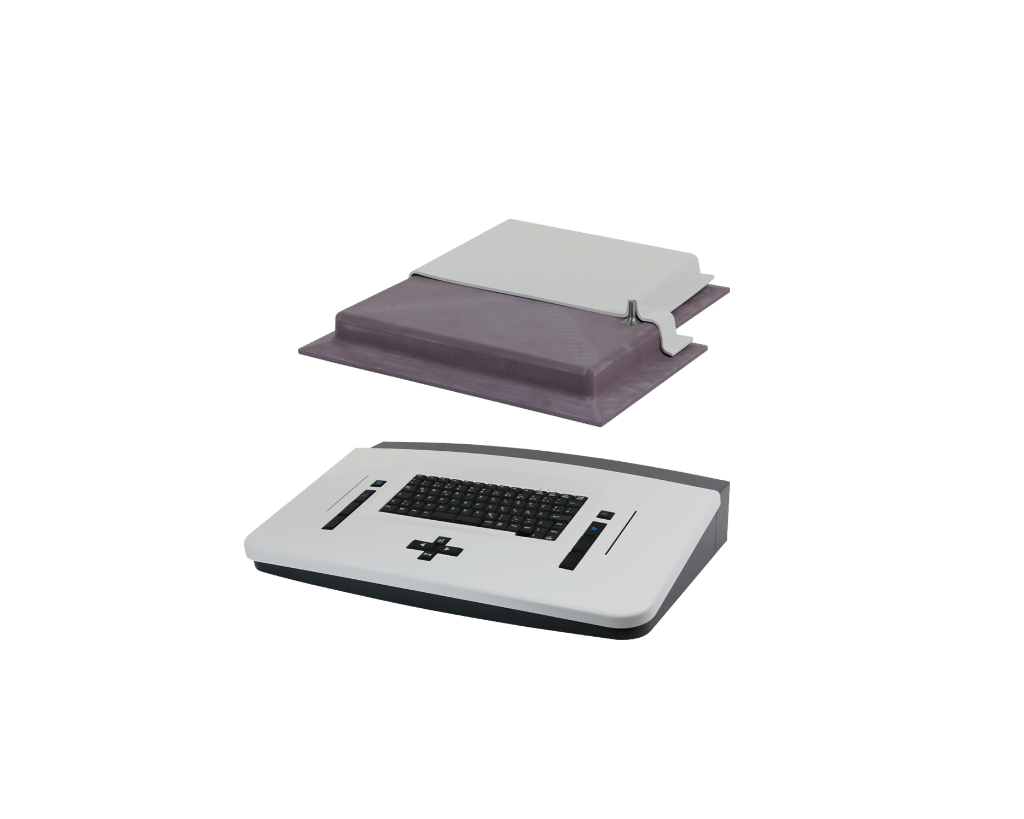
Thermoforming Technology for Custom Plastic Enclosures and Components
Do you need a large plastic component with a three-dimensional shape, a defined visible surface and precisely reproducible cut-outs? To ensure the finished component fits correctly, formability, tooling side, wall thickness distribution and CNC post-processing must all be carefully coordinated.
apra-plast manufactures custom plastic enclosures and components using thermoforming technology – from design engineering and toolmaking through to the machined, surface-finished and, if required, assembled moulded part.
The process is particularly suitable for small and medium production runs where large enclosure shells, protective hoods, covers or technical moulded parts need to be manufactured cost-effectively.
Plastic thermoforming, also known as vacuum forming, is a thermal forming process for thermoplastic sheets. At apra-plast, production consists of three coordinated process stages.

What Is Plastic Thermoforming?
Toolmaking: A single-sided male or female mould made from aluminium or synthetic resin is produced based on the component design. A component-specific milling fixture is also manufactured for subsequent 5-axis machining.
Thermoforming: A thermoplastic sheet blank is clamped in place and heated using radiant heaters. Vacuum and pressure force the softened plastic against the mould. Once cooled, the component retains its shape.
Post-Processing: The excess material around the formed part is removed. The external contour, drilled holes, cut-outs and pockets are then machined on a 5-axis machining centre.
Your Challenges, Our Technical Solutions
Whether thermoforming is suitable for a particular project depends on more than production quantity alone. The decisive factor is how geometry, material, visible surfaces, dimensional references and subsequent machining processes work together.
| Area | Our Customers' Challenges | Our Technical Solution |
|---|---|---|
|
Geometry and Demoulding
|

|

|
|
Visible Surfaces and Tooling Side
|
|
|
|
Wall Thickness Distribution
|
|
|
|
Production Quantities and Tooling
|
|
|
|
Contours and Interfaces
|
|
|
|
Materials and Surfaces
|
|
|
|
Protection and Integration
|
|
|
|
Surface Finishing and Marking
|
|
|
Materials and Surface Finishes
apra-plast processes a range of thermoplastic sheet materials, including ABS, polystyrene and polycarbonate. Material selection is based on component geometry, expected loads, desired appearance and required supporting documentation.
Material properties such as suitability for food contact, heat resistance or a UL 94 classification apply only to the specific material selected and must be verified on a project-specific basis.
Typical Components and Applications
Thermoforming is used to manufacture a wide range of components, including enclosure shells, protective hoods, covers, cladding panels, trays, containers, decorative panels and technical moulded parts.
Typical applications include equipment and electronic enclosures, machinery and plant cladding, operator panels and decorative covers, as well as combined plastic and metal solutions for industrial, measurement and automation technology.
Discuss Your Project Requirements
Would you like to find out whether your component is suitable for thermoforming and which tooling, material and post-processing approach best suits your planned production quantity?
Send us your 3D CAD data, technical drawing or project sketch. Together, we can review the geometry, visible surfaces, functional requirements, production quantity and any additional services required.

Product Management for Thermoforming
