Press-Fitting and Riveting
Fixing points must be suited to the sheet thickness, load and subsequent assembly requirements. apra integrates press-fit and rivet elements into your enclosure project to ensure that threads and connections are provided exactly where they are needed.
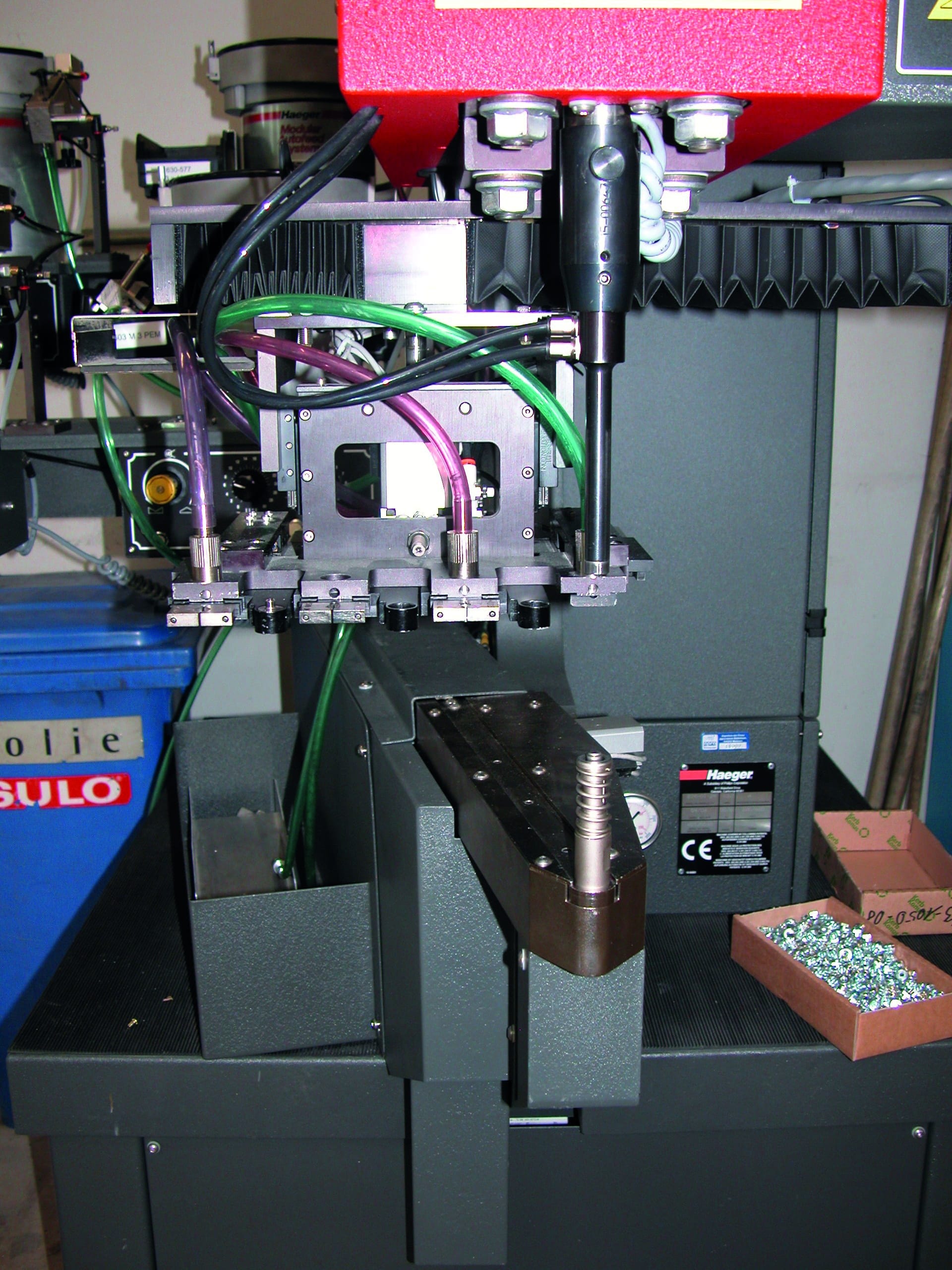
Press-fit studs and press-fit bushes
Press-fit studs and press-fit bushes are installed in a prepared hole in the sheet metal using a defined force. The material deforms around the element, creating a secure connection. This allows fixing and locating points to be integrated directly into the component.
Whether a press-fit element can be used depends on factors such as sheet thickness, material, hole geometry and the loads it will be subjected to during use. apra assesses suitability on a project-specific basis, particularly for thin or sensitive sheet metal.
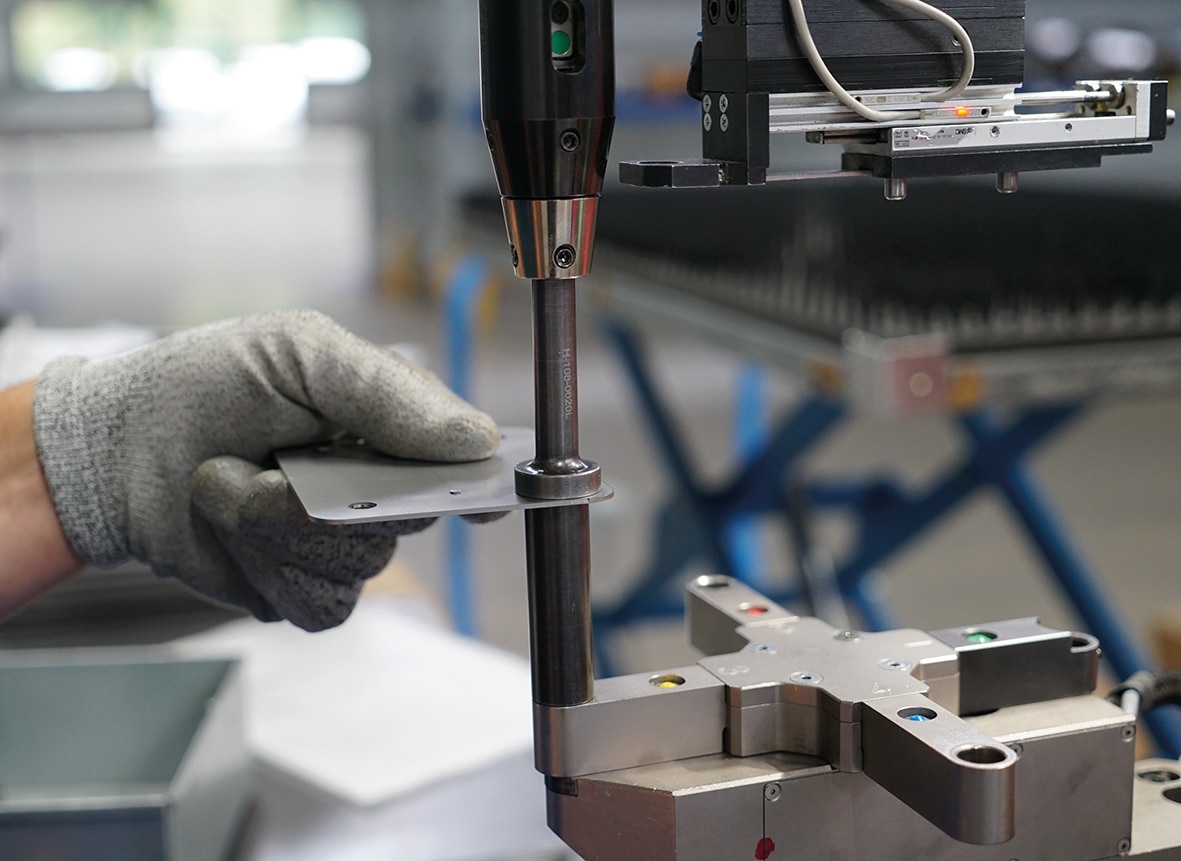
Rivet nuts for reliable threaded fixing points
Rivet nuts create reliable threaded fixing points in thin-walled components. Depending on the design, they can also be suitable for parts that have already undergone surface treatment. Key selection criteria include thread size, sheet thickness, mounting hole dimensions, torque and tool access.
Correctly positioning fixing points in the design
The position of a fixing element often affects other areas of the component. If a fixing point is too close to a bend line, it may become deformed during bending or obstruct access for the bending tool. Adjacent cut-outs, welded joints and subsequent assembly steps must also be taken into account.
For visible enclosure surfaces, apra also checks whether an inserted element could leave a visible impression on the opposite side. The joining technology is therefore considered in conjunction with the design, surface finish and intended use of the component.
Integrating press-fitting and riveting into the overall manufacturing process
At apra, the installation of fixing elements is planned as part of the complete manufacturing process. Depending on the component and the method used, this may take place after punching, laser cutting and deburring, and either before or after bending and surface treatment.
Subsequent mechanical assembly and the integration of electrical and electronic components can also be incorporated into the further manufacturing process. This enables individual sheet metal parts to be turned into ready-to-install enclosure components, cabinets or complete metal assemblies.
From project requirements to a production-ready solution
You do not need to specify the fixing element or joining method when making an enquiry. apra assesses which solution is technically suitable and economically viable for your project and prepares a corresponding quotation.
Once the order has been placed, our in-house design team handles the production-oriented implementation and coordinates the technical details with you.

Product- / Project Management
Information helpful for assessing your project
Drawings, 3D models or samples help us assess your requirements. We also need information about the material, sheet thickness, surface finish, quantity and intended function of the fixing point.
If you already have specific requirements regarding load capacity, torque, corrosion protection, sealing or removability, these should also be taken into account. Based on this information, apra assesses which fixing element and installation method are suitable for the component.