Custom Consoles and Terminals
Consoles and terminals serve as central operator workstations for controlling, monitoring and operating technical systems. They are used in applications such as machinery and industrial plants, control stations, control rooms and navigation systems.
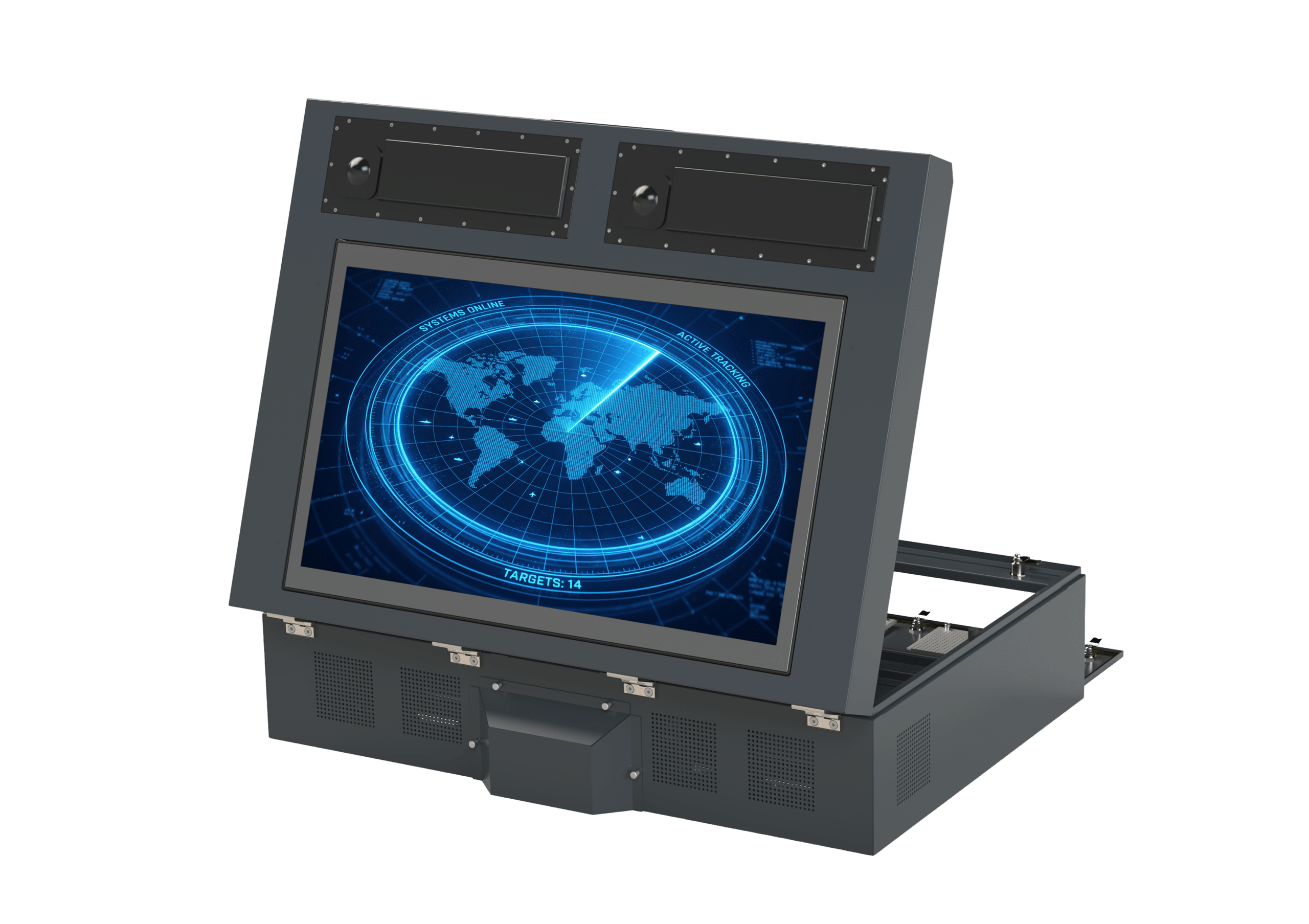
Consoles & Terminals for Industrial, Technical and Maritime Applications
The apra-group manufactures custom metal consoles and terminals for industrial, technical and maritime applications. These systems serve as workstations for operation, control, information display and monitoring, and can be tailored to the specific requirements of each application.

What Are Consoles and Terminals?
Consoles and terminals provide the interface between people and technology. Different terms are used depending on the industry, application or company standards. What they have in common is their function as workstations for operation, control, information display or monitoring. They are used in applications including machinery and industrial plants, control stations, control rooms, navigation systems and technical workstations.
When Do Our Customers Choose Custom Consoles and Terminals?
Whether an existing solution can be used or a custom design is required depends primarily on the installation environment, operating concept and components to be integrated.
| Area | Your Challenge | Our Technical Solution |
|---|---|---|
|
Installation Space & Dimensions
|

|

|
|
Ergonomics & Visibility
|
|
|
|
Component Integration
|
|
|
|
Heat Generation
|
|
|
|
Stability & Construction
|
|
|
|
Cable Routing
|
|
|
|
Maintenance & Accessibility
|
|
|
|
Materials & Construction
|
|
|
Discuss Your Requirements

Head of Sales Operations
Design, Manufacturing and Integration
The apra-group provides custom console and terminal solutions, from design engineering and development through mechanical manufacturing to assembly. The systems are manufactured to project-specific requirements using sheet steel, stainless steel, aluminium or combinations of these materials.
Where required, components such as monitors, touchscreens, industrial PCs, keyboards, trackballs, controls and communication equipment can be integrated. Wiring and electrical testing can also be included in the project scope.