3D Printing
Plastic 3D printing enables the tool-free production of custom enclosures and technical components, from initial prototypes and functional models to small production runs. With four different printing processes available, materials, surface finishes and component properties can be tailored to the specific requirements of each project.
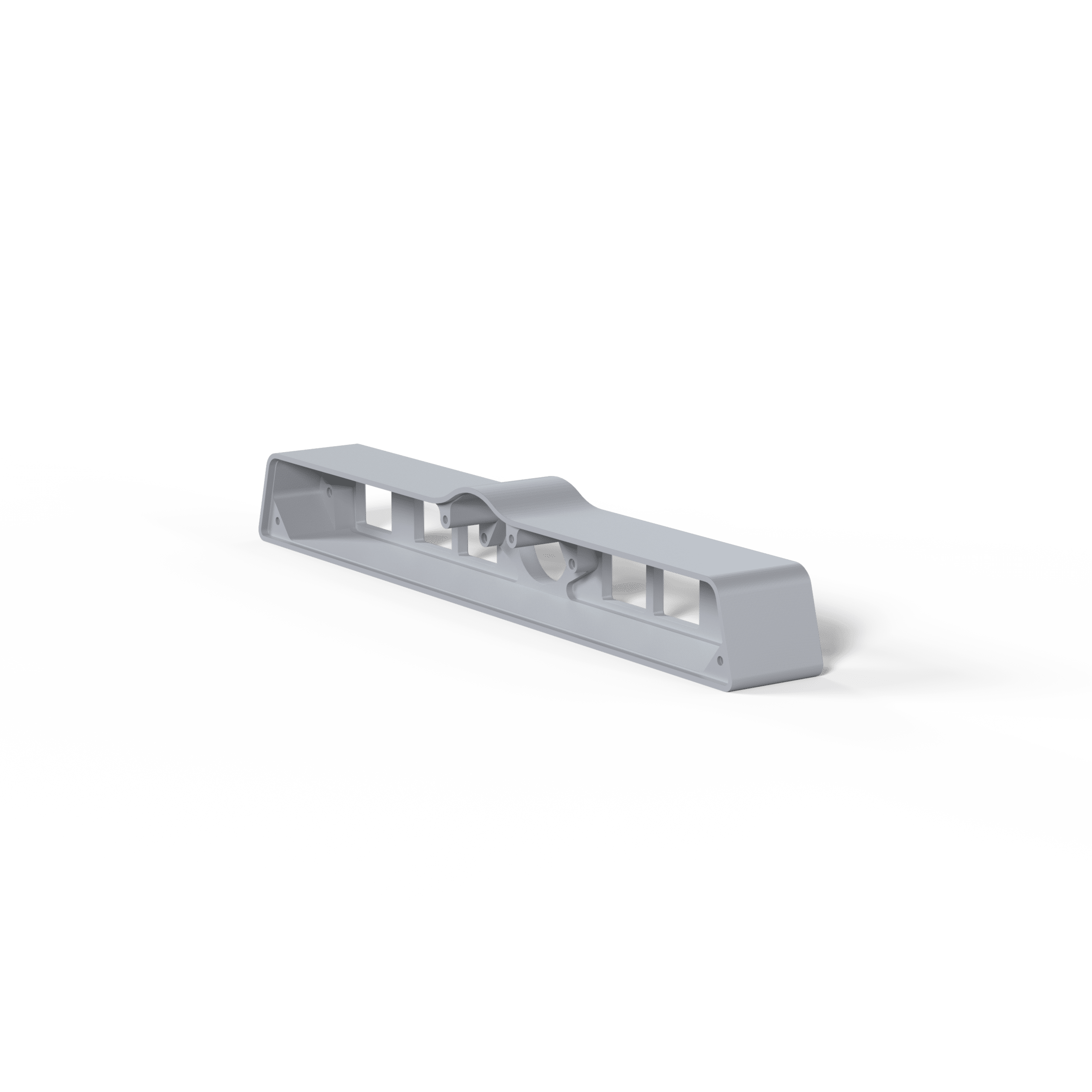
3D Printing for Custom Plastic Enclosures and Components
From initial functional prototypes to additively manufactured small production runs: four plastic 3D printing processes for different requirements.
Do you need a plastic enclosure or technical plastic component that can be manufactured without mould tooling, tested early in the development process or produced in small quantities?
The key consideration is not simply whether the component can be 3D-printed, but which process, material and post-processing methods are best suited to its geometry, function, surface requirements and planned production quantity.
apra-plast manufactures custom plastic enclosures and components using 3D printing technology. Four different plastic 3D printing processes are available: Fused Deposition Modelling (FDM), Material Jetting (MJ), Stereolithography (SLA) and Selective Laser Sintering (SLS).
apra-plast supports projects from 3D design engineering and process selection through additive manufacturing to surface finishing and, on request, the assembly of additional components.

What Is Plastic 3D Printing?
In plastic 3D printing, also known as additive manufacturing, components are built layer by layer directly from digital 3D data. As no conventional mould tooling is required, custom geometries, design modifications and product variants can be implemented flexibly.
The most suitable printing process depends on the required function, surface finish, mechanical performance and production quantity. The four processes used by apra-plast offer different technical capabilities to meet these requirements.
Comparing the Four 3D Printing Processes at apra-plast
The following overview highlights the main differences. The specific process is always selected based on the component and its intended function. No single process is equally suitable for every requirement.
| Process | How It Works | Materials and Colours | Particular Suitability |
|---|---|---|---|
|
FDM – Fused Deposition Modelling
|
Thermoplastic filament is melted in a heated nozzle and deposited in successive paths.
|
PLA, PETG, ABS, TPU and others; wide range of colours.
|
Cost-effective process for functional prototypes, simple to complex functional components, manufacturing aids and small production runs. Layer structure and required support areas must be considered during design.
|
|
MJ – Material Jetting
|
Liquid photopolymer is deposited in fine droplets and immediately cured using UV light.
|
Photopolymers; predominantly natural colours.
|
Very fine resolution, smooth surfaces and high detail accuracy. Suitable for design and functional prototypes, components designed for sealing applications and highly detailed master models for vacuum casting.
|
|
SLA – Stereolithography
|
Liquid photopolymer resin is cured layer by layer using a UV laser or exposure system.
|
Photopolymers; limited colour selection.
|
Fine structures and smooth visible surfaces for presentation models, design prototypes and precise technical components. Material properties and post-curing requirements are assessed for each project.
|
|
SLS – Selective Laser Sintering
|
A laser fuses plastic powder within a powder bed. The loose powder supports the component during the build process.
|
PA11, PA12, TPU and others; white or grey, with colouring possible.
|
Complex, mechanically robust functional components without additional support structures. Suitable for undercuts, internal geometries and demand-based small production runs.
|
When Is 3D Printing Suitable?
Additive manufacturing is particularly attractive when designs are still being modified, conventional tooling is not justified by the project stage or production quantity, or geometries would be difficult to manufacture using conventional processes.
However, a reliable assessment must also consider load direction, functional dimensions, visible surfaces, required supporting documentation and the subsequent stages of product development.
| Area | Your Challenge | Our Technical Solution |
|---|---|---|
|
Project Phase and Production Quantity
|

|

|
|
Process Selection
|
|
|
|
Geometry and Functionality
|
|
|
|
Materials and Mechanical Loads
|
|
|
|
Surface Finish and Visible Components
|
|
|
|
Design Changes and Variants
|
|
|
|
Protection and Integration
|
|
|
|
Series Production and Subsequent Processes
|
|
|
Materials, Component Properties and Design Limitations
Depending on the printing process, thermoplastic filaments, plastic powders or liquid photopolymers are used.
apra-plast selects the process and material for each project based on geometry, mechanical loads, temperature, surface finish, dimensional requirements and operating conditions.
As build orientation and layer structure influence component properties, wall construction, functional surfaces, support areas and post-processing are considered during the design phase.
Requirements such as sealing performance, fire protection or defined mechanical strength must be assessed for the specific material and component and, where necessary, verified through testing.
Selected projects demonstrate how different 3D printing processes, materials and additional services can be used to manufacture custom plastic enclosures, functional components and manufacturing aids.
3D printing is used to manufacture a wide range of components, including electronic and equipment enclosures, enclosure lids and inserts, front panels and cover panels, brackets, mounts, adapters, handles, covers, and air and cable guides.
Sample components, design and functional models, display models for trade fairs and exhibitions, master models for vacuum casting, assembly aids, jigs, gauges, grippers and spare parts manufactured on demand can also be produced using additive manufacturing.
Typical applications include design and functional testing, installation and assembly trials, product presentations, pilot and pre-production runs, bridging production requirements until series production tooling becomes available, and small production runs or series with numerous variants.
These solutions are used in sectors including medical technology, the automotive industry, equipment manufacturing, industrial electronics, and mechanical and plant engineering.
Discuss Your Project Requirements
Would you like to find out which 3D printing process best suits your component, its current stage of development and the planned production quantity?
Send us your IGES or STEP files, technical drawing or project sketch. Together, we can review the geometry, function, material, surface finish, critical dimensions, production quantity and any additional services required.

Product Management for Vacuum Casting Technology / 3D Printing Technology
When Is Another Manufacturing Process More Suitable?
3D printing is not automatically the most cost-effective or technically suitable solution for every plastic component. For consistently high and stable production volumes, injection moulding may be more appropriate. Vacuum casting can offer advantages when several identical components with specific surface finish or material requirements are needed. Large enclosures made from sheet material may be manufactured more economically using milling and bending technology, while thermoforming may be the better choice for open, thin-walled moulded parts.
apra-plast therefore assesses not only whether a component can be 3D printed, but also the overall project requirements. Key factors include component geometry, material, project phase, production quantity, likelihood of design changes, post-processing, assembly and total costs over the planned production volume.
If another process proves more suitable from a technical or economic perspective, apra-plast can offer alternatives from its own manufacturing capabilities, including vacuum casting, milling and bending technology, thermoforming and injection moulding.