Vacuum Casting Technology
Vacuum casting technology enables the fast and cost-effective production of custom plastic components by replicating master models and prototypes. It is suitable for everything from initial samples to pre-production and small production runs. Complex geometries, undercuts and a range of material properties can also be achieved.
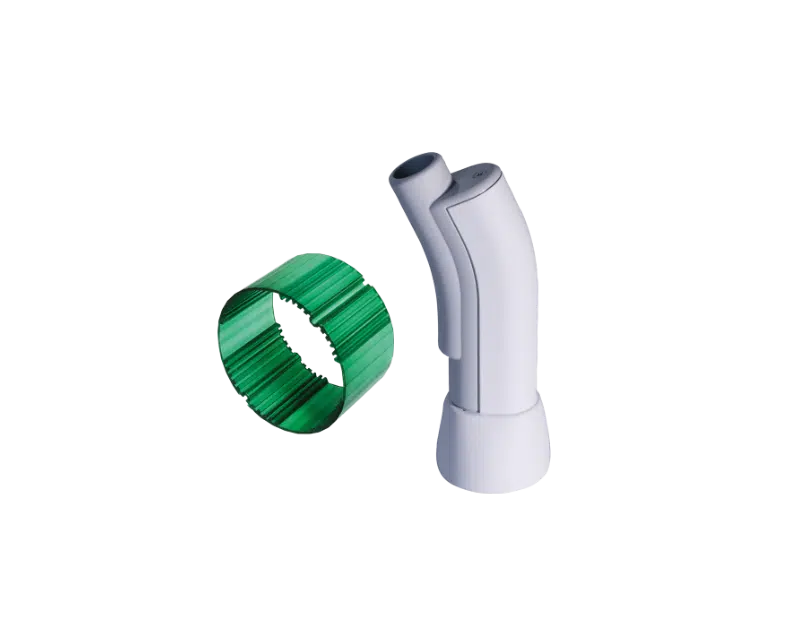
Vacuum Casting for Custom Plastic Enclosures and Components
Do you need several identical plastic components or prototypes in small quantities? Vacuum casting is a process that enables the fast and cost-effective production of plastic components by replicating master models and prototypes.
apra-plast manufactures custom plastic enclosures and components using vacuum casting technology. The process is suitable for prototypes, pre-production and small production runs where complex geometries, undercuts, thick-walled sections or different material properties are required.
Whether you have 3D CAD data, a technical drawing or an existing sample component, we work with you to assess how your requirements can be met in a technically feasible and cost-effective way.
The process is also known as PU vacuum casting, polyurethane vacuum casting or silicone mould casting. It enables the accurate reproduction of a master model and should not be confused with vacuum forming or thermoforming, where a heated plastic sheet is formed over a mould.

What Is Vacuum Casting?
Vacuum casting consists of four coordinated stages:
Master Model: A master model is produced from CAD data or an existing sample component and given the required surface finish.
Mould Making: The master model is surrounded by silicone in a mould box. Once the silicone has cured, the mould is opened along the specified parting line and the master model is removed.
Casting: The resulting mould cavity is filled under vacuum with liquid two-component polyurethane casting resin. Once the resin has cured, the component is removed from the mould.
Post-Processing: The sprue and parting line are removed manually. Depending on requirements, further operations may include drilling, producing cut-outs, installing threaded inserts or additional machining and surface finishing.
When Is Vacuum Casting Technology Suitable?
Whether vacuum casting is suitable for a particular project depends on more than production quantity alone. Geometry, functional dimensions, material properties, surface finish and the planned next stages of product development must also be considered together.
| Area | Our Customers' Challenges | Our Technical Solution |
|---|---|---|
|
Project Phase and Production Quantity
|

|

|
|
Geometry and Demoulding
|
|
|
|
Material Properties
|
|
|
|
Surface Finish and Appearance
|
|
|
|
Dimensional Accuracy and Functional Dimensions
|
|
|
|
Mould Life and Design Changes
|
|
|
|
Inserts and Functional Features
|
|
|
|
Surface Finishing and Integration
|
|
|
Typical Enclosures, Components and Applications
Vacuum casting technology can be used to manufacture:
- Enclosure shells, covers and panels
Operator panels, decorative components and transparent viewing parts
Handles, knobs, brackets and technical moulded parts
Flexible components and sealing elements
Components and assemblies incorporating undercuts, threaded inserts, metal parts or additional assembly operations
Typical applications include:
- Functional and design prototypes
Assembly trials
Field testing
Pilot and pre-production runs
Bridging production requirements until series production tooling becomes available
Manufacturing, Surface Finishing and Assembly at apra-plast
apra-plast supports projects from design development and master model production through silicone mould making and vacuum casting to post-processing. On request, we also provide painting, EMC coating, printing, films and membrane keypads, gaskets, metal components and electrical assembly.

Product Management for Vacuum Casting Technology / 3D Printing Technology
When Vacuum Casting Is Not the Right Solution
For consistently high production volumes, mandatory material properties or requirements that cannot be verified for the selected casting resin, another manufacturing process may be more suitable.
There is no universally applicable production quantity threshold. The decisive factors are component geometry, material, quality requirements, product variants and recurring demand.
apra-plast therefore assesses the technical and economic suitability of vacuum casting for each individual project. Vacuum casting technology can be combined with or supplemented by in-house 3D printing, injection moulding, milling and bending, thermoforming or metal fabrication, or replaced by a more suitable process.