Welding
Whether it is a dimensionally accurate enclosure body, a load-bearing frame or a visible weld seam, apra selects the joining process to suit the material, geometry and surface finish. Distortion, rework and subsequent assembly steps are also taken into account.
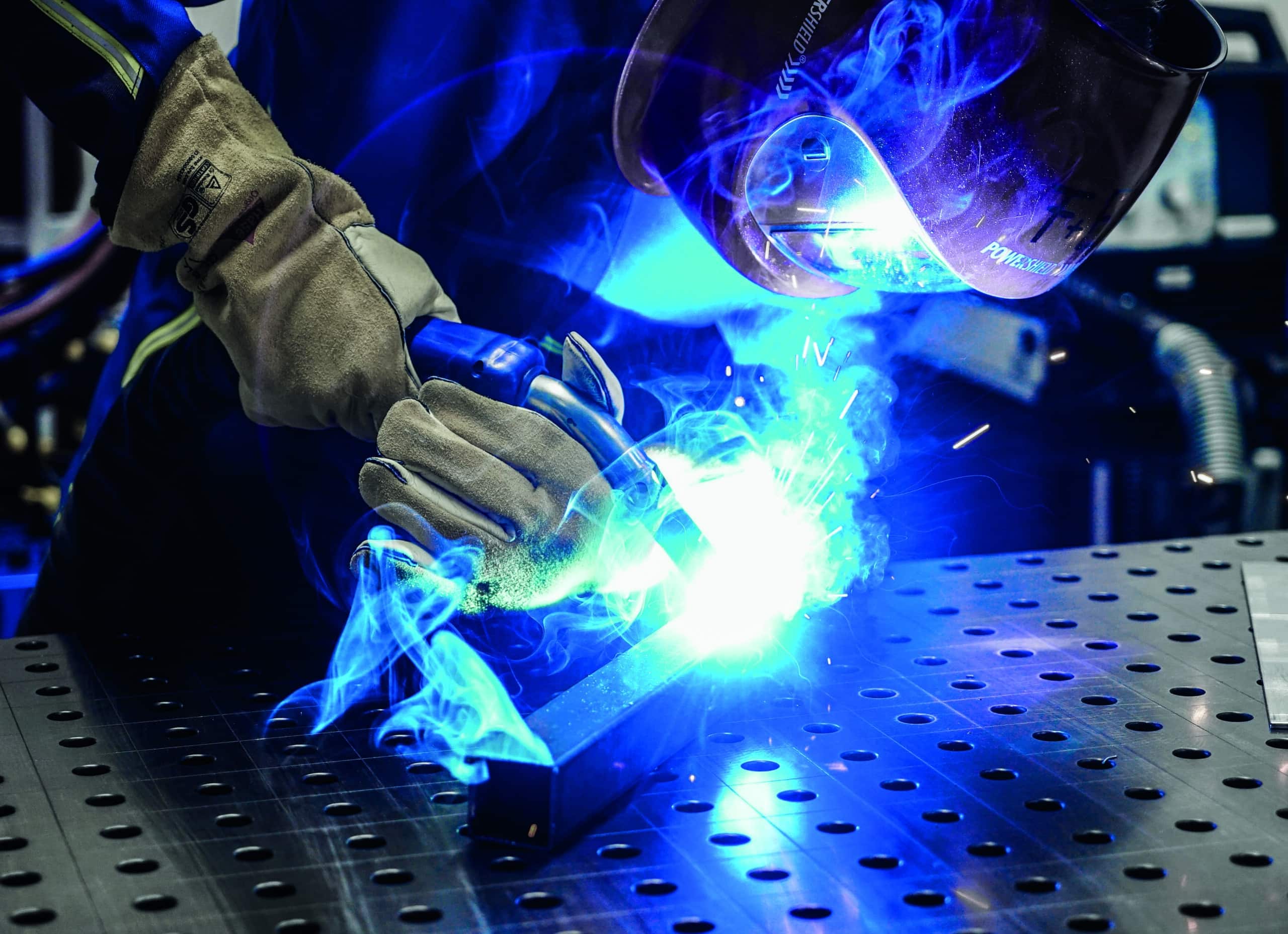
Using various welding processes, the apra Group joins sheet metal components to create robust, dimensionally accurate and visually consistent enclosures, cabinets and assemblies. The process selected is tailored to the material, geometry, seam requirements, visible surfaces, batch size and planned subsequent processes.
Selecting the right welding process for your project
A welded joint must do more than permanently join two components. In enclosure and cabinet projects, it affects structural stability, dimensional accuracy, tightness, surface quality and subsequent assembly. At the same time, welding processes differ in terms of heat input, gap-bridging capability, accessibility, automation potential and the amount of rework required.
For this reason, apra considers not only the individual weld seam but the entire design. Component layout, folded edges, joining direction, clamping options and subsequent processes such as grinding, coating and assembly are all taken into account at an early stage when selecting the appropriate process.
| Requirement | Possible manufacturing process | Key selection criteria |
|---|---|---|
|
Repeatable, dimensionally accurate enclosures and covers
|
Laser welding
|
Precisely fitting components, small joint gaps, reliable positioning, accessibility and suitable fixtures
|
|
Flexible seam routing or small batch sizes
|
TIG-, MIG- or MAG welding
|
Material, sheet thickness, seam type, heat input, distortion and required finishing work
|
|
Overlapping sheet metal joints
|
Spot welding
|
Material combination, sheet thickness, electrode access, spot spacing and visual requirements
|
|
Fastening elements attached directly to sheet metal components
|
Stud welding
|
Type and position of the fastening element, sheet thickness, distances from edges and bends, and subsequent loads
|
|
Visible surfaces or coated assemblies
|
Project-specific combination of processes
|
Seam appearance, grinding requirements, distortion, corrosion protection and sequence of manufacturing steps
|
Coordinating dimensional accuracy, surface finish and testing requirements at an early stage
Welding heat can cause components to distort, affecting gap dimensions, door functions, mounting surfaces and the fit of other components. apra therefore takes the welding sequence, tack welds, fixtures and any necessary straightening or grinding into account during production planning. This coordination is particularly important for thin-walled enclosures and long weld seams.
For visible surfaces, the required seam appearance is also defined, along with the type of finishing required or permitted before coating. Requirements relating to strength, tightness, corrosion protection, documentation or testing should be specified before the quotation stage. A leak-tight or standards-compliant joint is not achieved through the welding process alone. It depends on the design, weld execution and agreed testing concept.
From sheet metal components to finished welded assemblies
At apra, welding is integrated into an end-to-end manufacturing process for enclosure and cabinet projects. Sheet metal components can first be punched, laser-cut, deburred and press-braked. Depending on the project, joining can then be followed by grinding and straightening, surface treatment, printing, foam-in-place sealing, as well as mechanical and electrical assembly.
The in-house design department coordinates component layout, weld positions, tolerances and subsequent processes. This makes it possible to turn individual sheet metal components into coated enclosures, robust frames, cabinet assemblies or fully assembled solutions.
From project requirements to a manufacturing-ready solution
You do not need to specify the welding process when making an initial enquiry. Based on the function, material, geometry, seam requirements, surface finish, batch size, testing requirements and planned subsequent processes, apra assesses which solution is technically suitable and economically viable and prepares a tailored quotation.
Once the order has been placed, our in-house design department takes care of the manufacturing-ready implementation and coordinates the technical details with you.

Product- / Project Management
What information is useful for assessing your project
For a feasibility assessment, 2D drawings and, ideally, 3D data are useful. Key information includes the material, sheet thicknesses, component dimensions, seam position and type, accessibility, visible surfaces, tolerances and batch size. The required delivery condition and any subsequent surface treatment or assembly steps should also be specified.
Any requirements relating to strength, tightness, distortion, seam appearance, corrosion protection, testing, documentation or welding certifications should be agreed on a project-specific basis. If not all details have been finalised, apra can help you define the requirements and identify a suitable manufacturing process.